Short version: use the free demo to test the combat, pick Normal difficulty, start with the one-handed sword if you're unsure, and save Death Game Mode for a second run. The twelve decisions below cover the first-playthrough choices that matter, with a deeper guide linked from each section.
Evidence basis. Mechanics come from the playable demo, Bandai Namco’s official guides and the Day 1 patch notes. This guide emphasizes decisions and combat habits rather than unsupported damage, gauge or scaling figures.
Echoes of Aincrad hands you something no Sword Art Online game has before: your own created character, trapped alongside the other 10,000 players in the floating castle. That freedom means the first hour is full of decisions the older games made for you — and a few of them (your stat spread, your weapon experience) follow you from the demo into the full game. Here's how to make each one on purpose instead of by accident.
1. Play the free demo — your save carries over
The demo is a free 1–2 hour way to test the combat loop. Eligible character, level and weapon-experience progress transfers to the full game on the same platform, while appearance customization belongs to the retail character editor. Follow the demo walkthrough for the route, and use the session as the practical test recommended in our worth-buying breakdown: the retail game builds on the same timing, Stamina and partner fundamentals.
2. Pick Normal difficulty on your first run
The game offers four difficulty levels — Story, Normal, Hard and Very Hard — and Normal is the clearest first-run baseline. Story exists for players who are here for the narrative and want combat to step aside; the two upper tiers assume you already understand the combat rhythm you haven't learned yet. Producer Yosuke Futami has warned that certain enemies "can prove extremely difficult for newcomers," which is developer-speak for don't start on Hard. You can escalate later once parrying feels natural. The difficulty guide breaks down what each tier actually changes and who it's for.
3. Save Death Game Mode for your second playthrough
Death Game Mode is the headline feature: die once and your save file is permanently deleted, no backups, no appeals. It's explicitly designed as a second-playthrough option — it unlocks after you finish the game, though Deluxe and Ultimate buyers can unlock it early. Resist the early unlock. Permadeath in a combat system you haven't learned isn't tension, it's a coin flip with a delete key. Learn the game, then put your save on the line — the Death Game Mode guide covers how the mode works and which difficulty to pair it with, and the death game lore page explains why the franchise keeps returning to this particular nightmare.
4. The three gauges are the real tutorial
Combat runs on HP, Stamina and SP, and the relationship between them is the entire game. Stamina pays for almost everything — attacks, dodges, guards, sprinting — and it's one shared pool, so a player who swings until the bar is empty has nothing left to dodge with. SP fuels your Sword Skills and refills mainly by landing hits, which quietly pushes you to stay aggressive rather than turtle. From your first fight, practice ending combos one hit early so there's always an escape in the tank. The combat system guide explains the whole economy, and the Stamina & SP deep dive covers the two gauges that new players mismanage most.
5. Defense is a decision, not a reflex
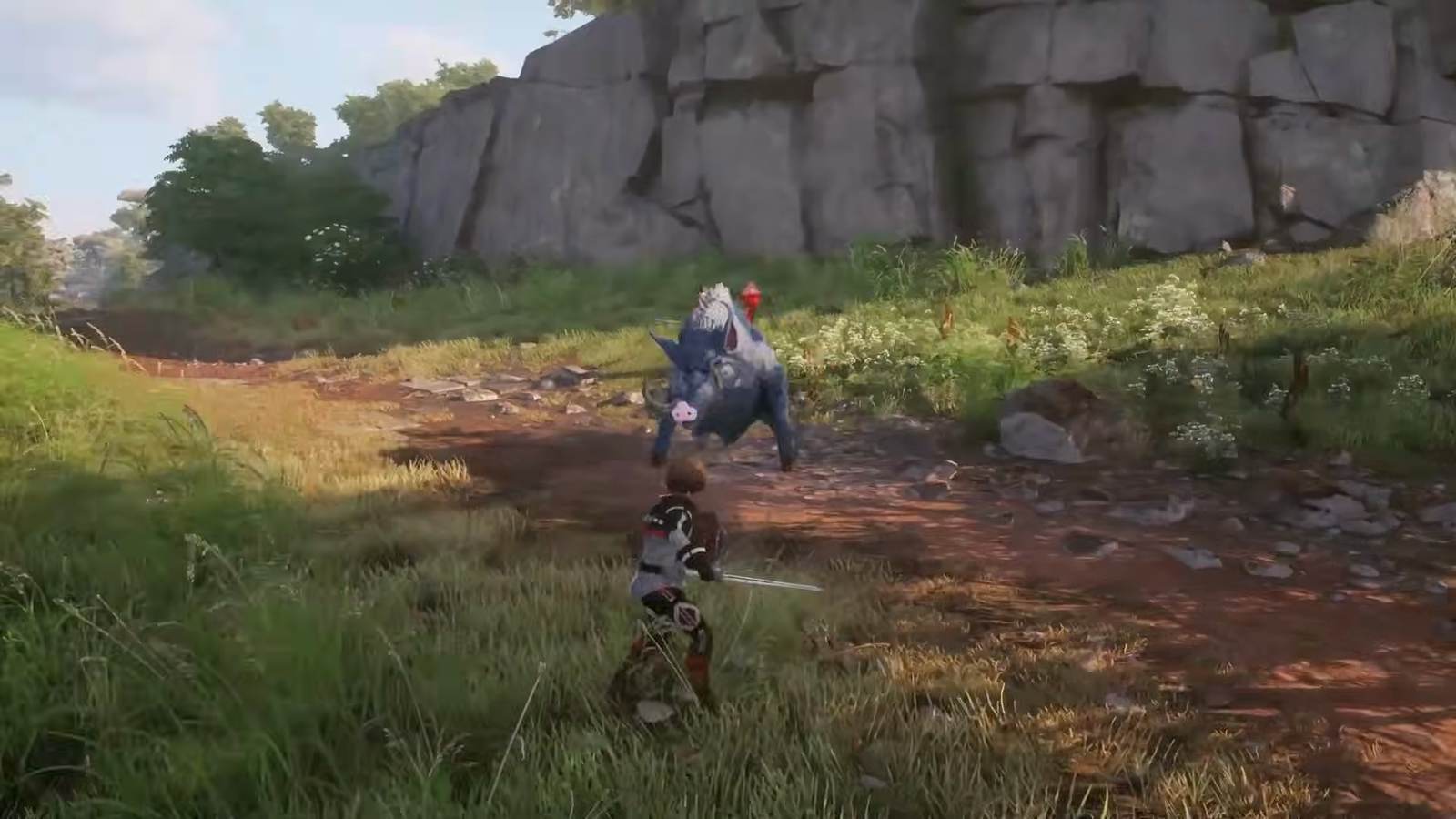
You have three defensive answers — dodge, guard/parry, and the Reversal Slash counter — and picking the right one for each attack is most of survival. Two equipment facts shape this choice before the fight even starts: only the one-handed sword, rapier and mace can hold a shield, and every two-handed weapon replaces your quick sidestep with a longer roll. In other words, your weapon decides your defensive toolkit. The rule of thumb: dodge the big committed slams, guard or parry the telegraphed strings, and counter when you've read a poke coming. The defense guide walks through when each answer wins.
6. Pick your weapon by the mistakes you'd rather make
Six weapon types are confirmed: one-handed sword, two-handed sword, two-handed axe, dagger, rapier and mace. Don't sort them by damage — sort them by what they punish. Fast weapons punish greed, heavy weapons punish whiffs, precise weapons punish sloppy spacing. If you're undecided, the one-handed sword forgives the widest range of beginner errors. Our weapon types guide explains how each class actually feels and what you're trading; the best starting weapon ranking orders all six for new players; and the weapons database holds the side-by-side stat view. The demo lets you sample every type before committing your retail progression.
7. Learn the seven attributes before you spend a point
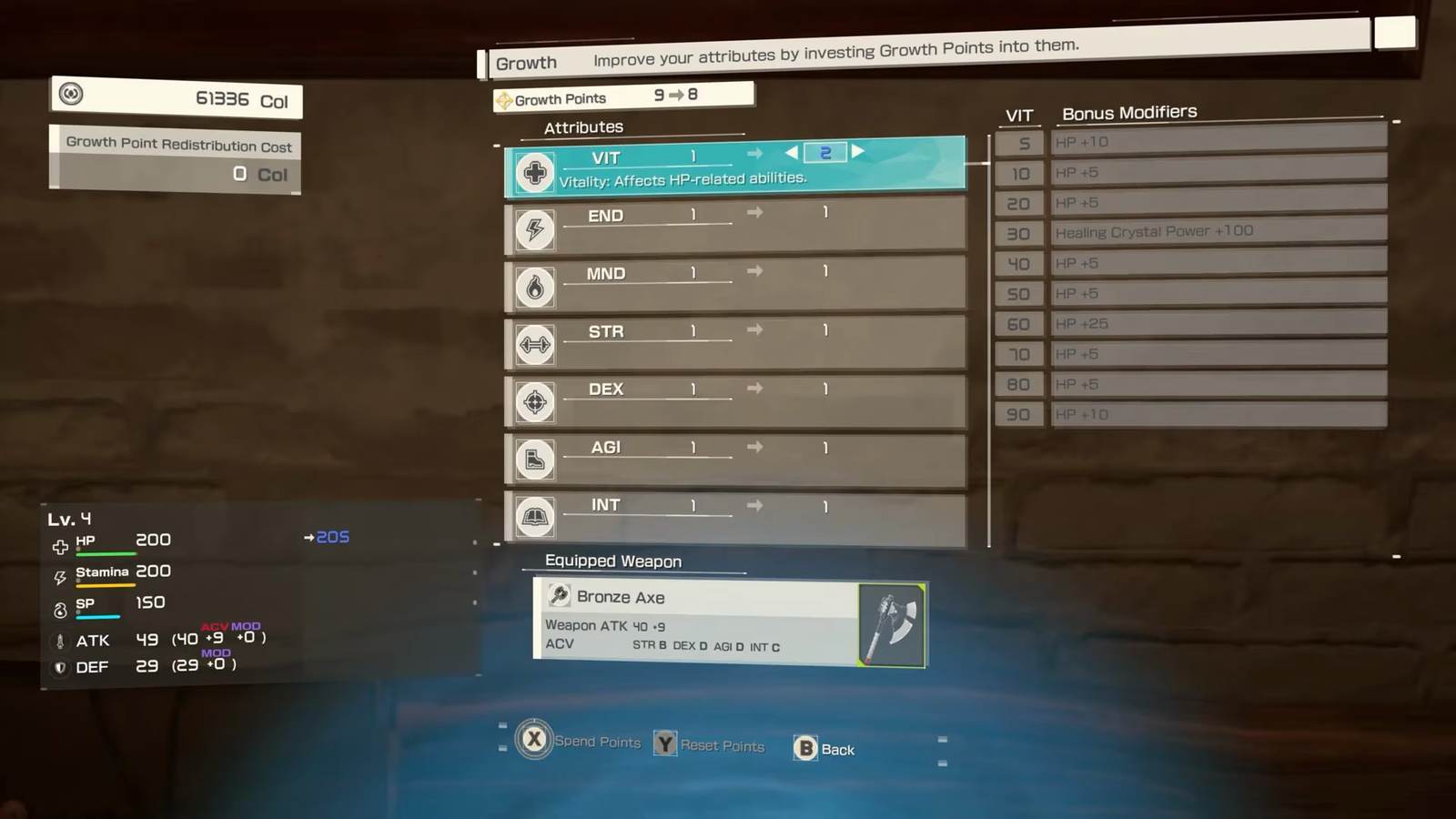
Your avatar has seven attributes in two groups: four damage stats — Strength, Dexterity, Agility, Intelligence — and three support stats: Vitality raises HP, Endurance raises Stamina, and Mind boosts the effectiveness of SP abilities. Leveling up grants Growth Points, which you bank and spend at the Inn; allocations carried from the demo deserve the same care as any retail build decision. Pick an identity and feed it, because seven attributes raised evenly dilute the role you are trying to build. The stats guide covers what each attribute does, the Growth Points guide covers how you earn and spend them, and the character creation guide has build templates to start from.
8. Your partner is half your build
You bring one AI partner on quests (in the demo, the solo swordsman Iori), and they're closer to a second equipment loadout than a sidekick: partners have their own gear, adjustable tactics, Support Skills you trigger mid-fight, and team-up Combination Skills that unlock as a battle builds. The practical rule: your partner should cover your build's weakness or double its strength. A fragile dagger build wants a defensive anchor; a tanky mace build wants someone supplying the damage it lacks. Think in pairs from day one — the partner system guide explains the slot, and the partner skills guide covers Support and Combination Skills in detail.
9. Town is part of the power curve
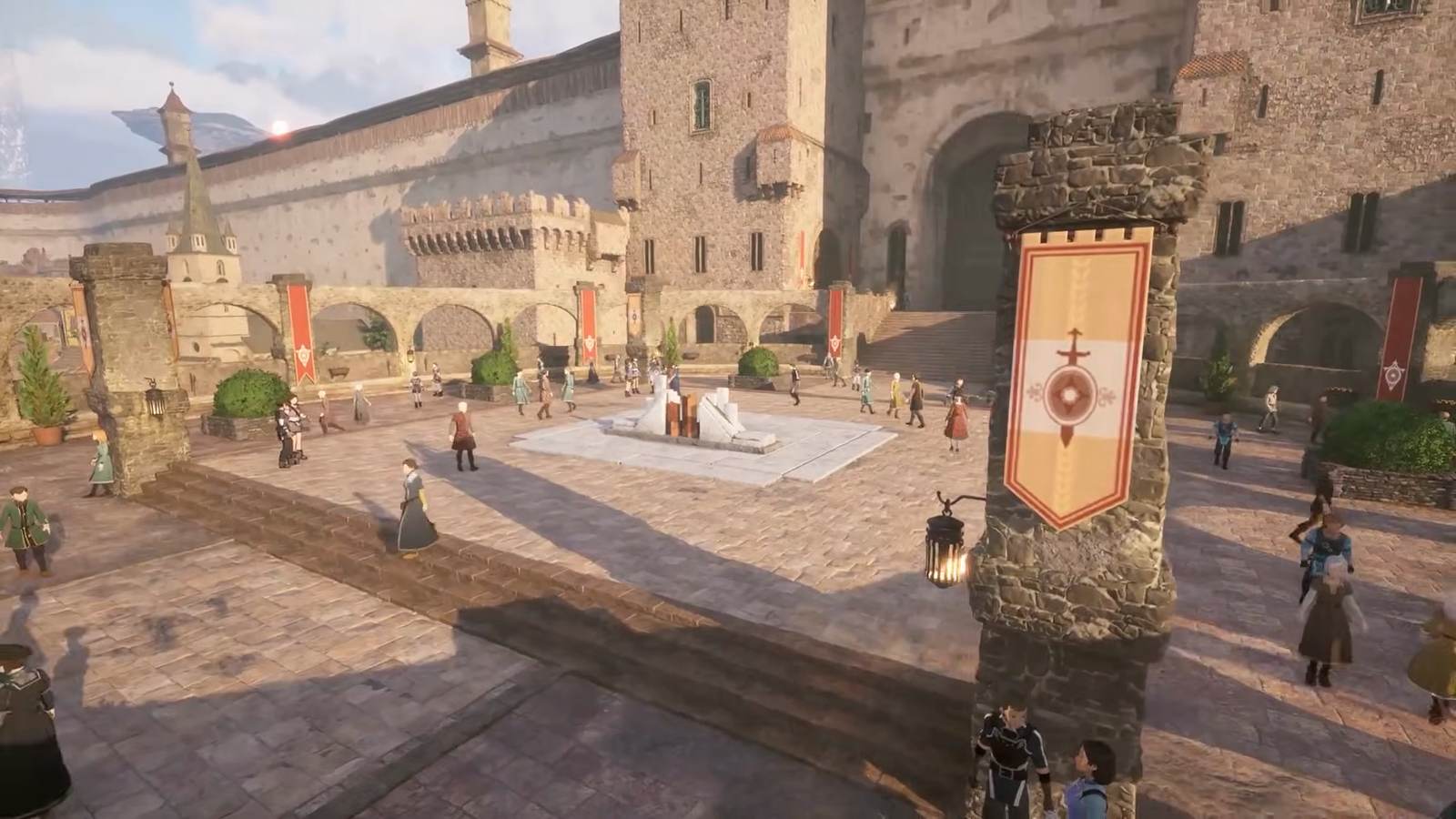
The loop the game wants from you is fight, return, reinvest — and each of the town's three facilities handles one piece of it. The Inn is where you rest and turn banked Growth Points into permanent stats. The Smithy creates, strengthens and fuses weapons — including EX-Mods, the fusion effects that customize how your weapon performs. The Merchant sells and crafts the consumables that decide hard fights, for Col you'll wish you'd budgeted. Players who route back through town regularly out-scale players who simply push forward — it's not downtime, it's the other half of the game. Details in the Smithy guide and the consumables guide.
10. Learn the shape of the world: checkpoints, Safety Areas, Arks
Aincrad's floors are organized around three structures worth knowing before you wander. Checkpoints reveal the surrounding map and its points of interest when activated — find the next one before you dive into side content and exploring loses most of its risk. Safety Areas are recovery points where your Healing Crystals refill. And Arks are boss arenas with no shop and no retreat — whatever you carry through that door is what you fight with, which is why the consumable habit from point nine matters. Exploration also feeds your Cardinal Rank, so curiosity literally pays. The checkpoints & Arks guide maps the whole structure, and the open world guide covers how the floors fit together.
11. The story is new — you don't need SAO homework
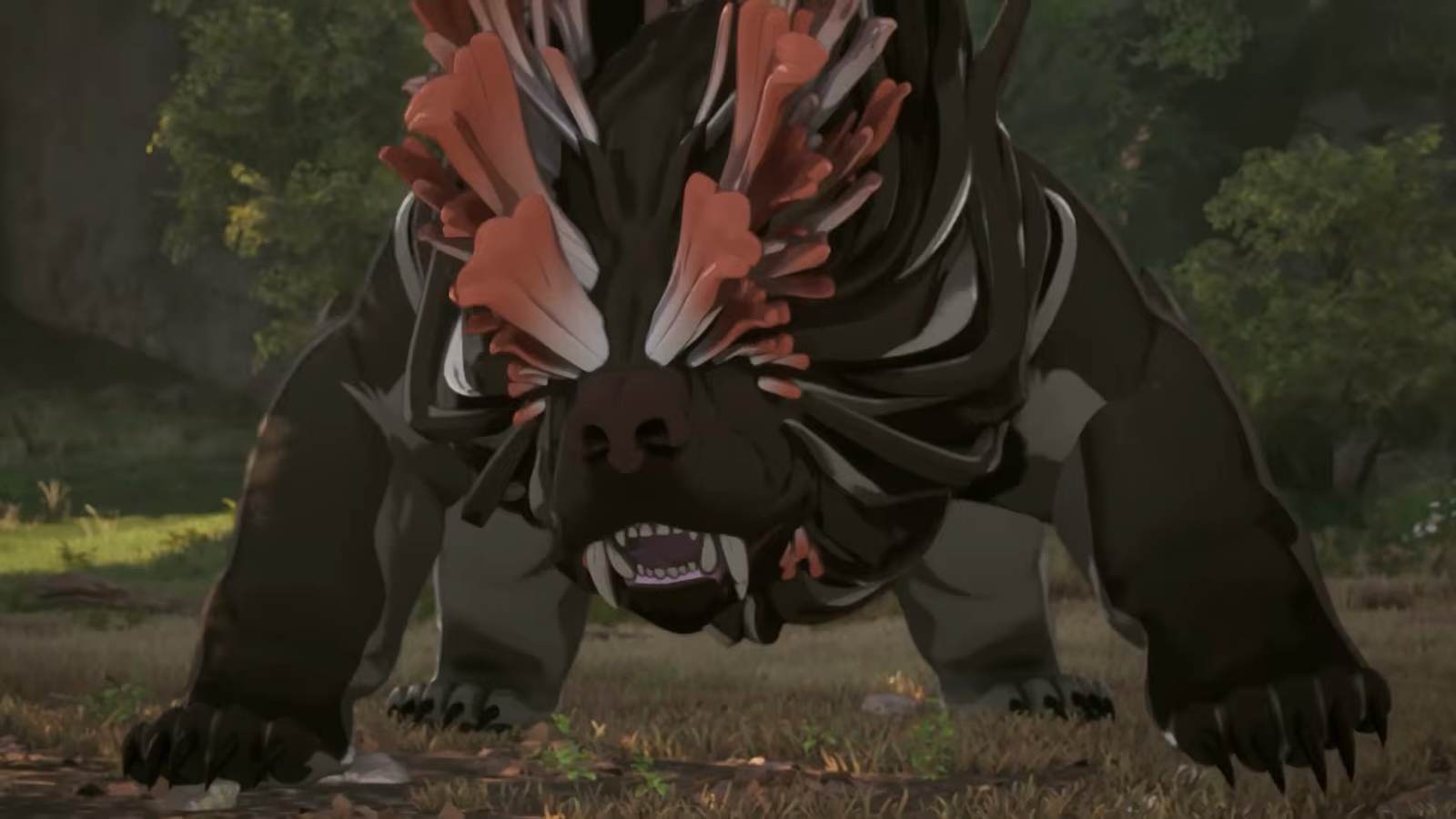
Echoes of Aincrad tells an original story running alongside the era anime fans know, with your avatar at the center. Kirito, Asuna and Argo are confirmed to appear — but as people you meet in the castle, not roles you play. The full premise fits in one sentence: 10,000 players are trapped in a VR world where in-game death is real death, and clearing every floor is the only exit. That's genuinely all the homework there is. If you want more anyway, the what-is-Aincrad explainer covers the setting, the anime guide tells you what's worth watching (strictly optional), and the characters page tracks everyone confirmed so far.
12. Buy smart: scope, editions and the PC fine print
Three facts matter before checkout. First, scope: the released game centers on Floors 1 and 2 of Aincrad, with a main-story planning range of 15–25 hours — the length breakdown explains how that estimate is constructed. Second, editions: Steam lists Standard at $69.99, Deluxe at $89.99 with the Expansion Pack and early Death Game unlock, and Ultimate at $109.99 with additional digital extras; the editions guide separates durable contents from expired pre-order offers. Third, the fine print: the game is single-player only, while the Steam build lists Denuvo and a five-system activation limit. Check the official system requirements and our source-bounded Steam Deck guide before choosing PC for handheld play.
Quick-reference checklist
- Before committing to a retail build: use the demo as a combat test — walkthrough here; eligible progress carries on the same platform
- Difficulty: Normal (Story if you're here for the narrative)
- Death Game Mode: off until your second run
- Weapon: one-handed sword if unsure — see the full ranking
- Stats: commit to an identity; remember Vitality→HP, Endurance→Stamina, Mind→SP
- Partner: cover your build's weakness or double its strength
- Town: Inn for stats, Smithy for weapons, Merchant for consumables — every loop
- World: next checkpoint first, side content second; never enter an Ark under-stocked
Bookmark this page — it gets a full revision with tested early-game routes and real numbers the week the game launches.
FAQ
What should I do first in Echoes of Aincrad?
Does demo progress carry over to the full game?
Do I need to watch Sword Art Online before playing?
What is the best starting weapon for beginners?
Sources
Mechanics and mode details from Bandai Namco's official guides and the playable demo; scope, editions and platform details from the official store listings. Gameplay frames captured from the official demo trailer.