Short version: Echoes of Aincrad is a real-time action RPG with no magic. Everything you do in a fight draws on three resources — HP, Stamina and SP — and the whole skill of the game is spending Stamina and SP efficiently while protecting HP. Learn this economy and you've learned the game; the weapon you pick and the boss you face just change the details.
Evidence basis. This guide combines Bandai Namco’s Gameplay Mechanics and Starter guides with direct observations from the playable demo. It explains combat qualitatively and does not assign undocumented damage, gauge or SP values.
The three gauges: HP, Stamina, SP
Every action-RPG lives or dies on its resource loop, and this one runs on a clean triangle. Get these three straight and nothing else in combat is mysterious.
- HP (Health) — your life. Lose it all and you're dead (and in Death Game Mode, that means your save is gone). HP is restored by Healing Potions and by Healing Crystals topped up in Safety Areas — not by standing still, so you can't passively regen your way out of a bad fight.
- Stamina — the action budget. Light attacks, heavy attacks, dodges, guards and sprinting all spend Stamina, and it refills when you stop spending it. Empty it and you're stuck: no dodge, no sprint, no swing, wide open to whatever comes next.
- SP — the skill budget, spent only on Sword Skills. Crucially, SP refills mainly by landing attacks, so the game rewards staying in the fight rather than backing off to wait for a cooldown.
The tension between these three is the entire game. Stamina says "don't over-commit"; SP says "stay aggressive to fuel your big hits"; HP says "but one greedy combo can end you." Good players read a fight as a constant negotiation between those three voices.
Stamina is the pace-setter
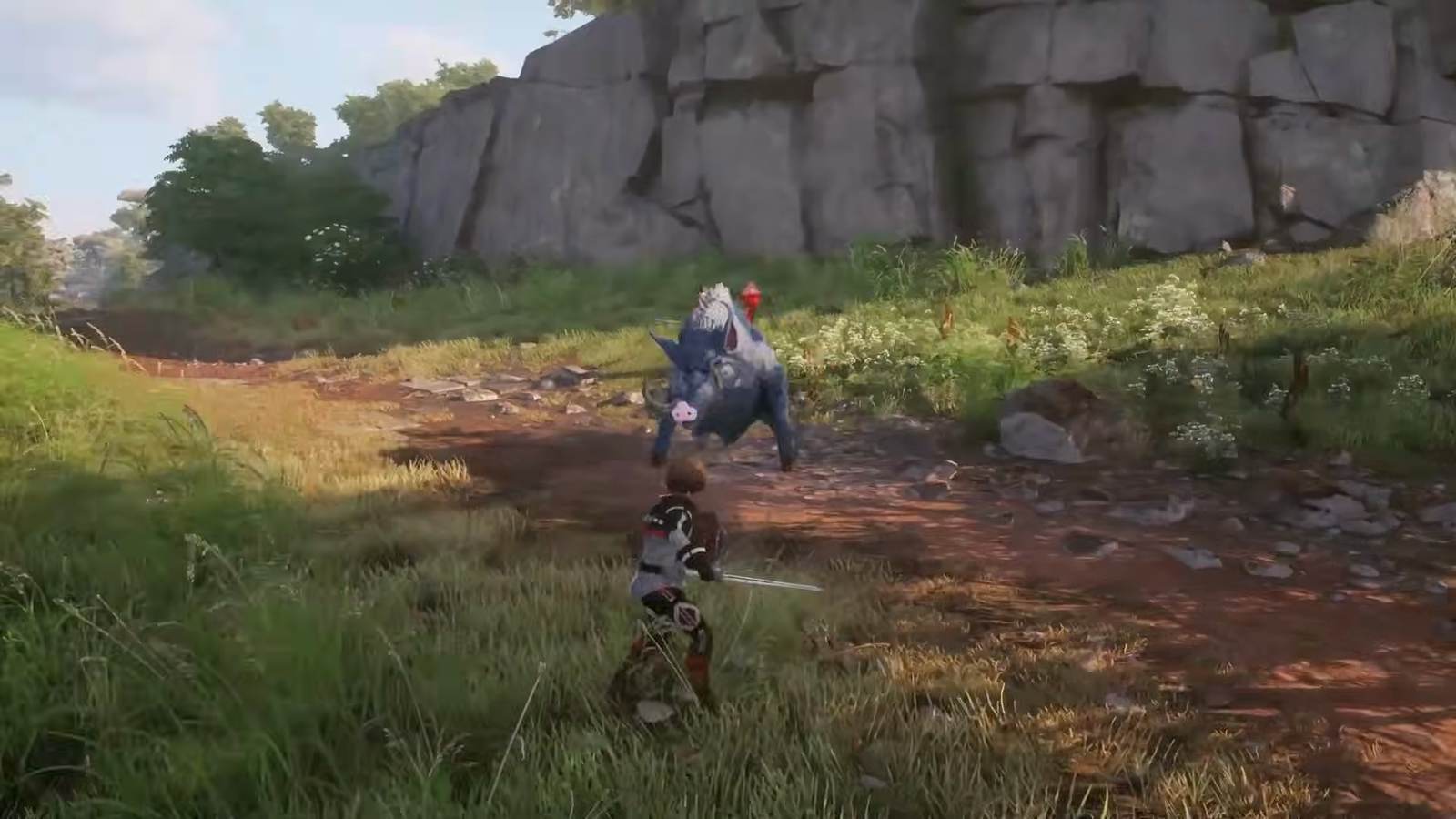
If you take one idea from this page, make it this: Stamina is a shared pool, and it forces a measured pace. Because attacking, dodging, guarding and sprinting all draw from the same bar, you physically cannot mash. Spam light attacks and you'll have nothing left to dodge the counter; sprint everywhere and you'll arrive at a fight already gassed. The intended rhythm is bursty: commit a short string, then let Stamina breathe while you read the enemy. Every boss in the demo — the Sentry Golem and Illfang especially — punishes players who empty the bar and then need a dodge they can't afford. Managing this one gauge is the difference between clean fights and frantic ones.
SP and Sword Skills: your payoff moves
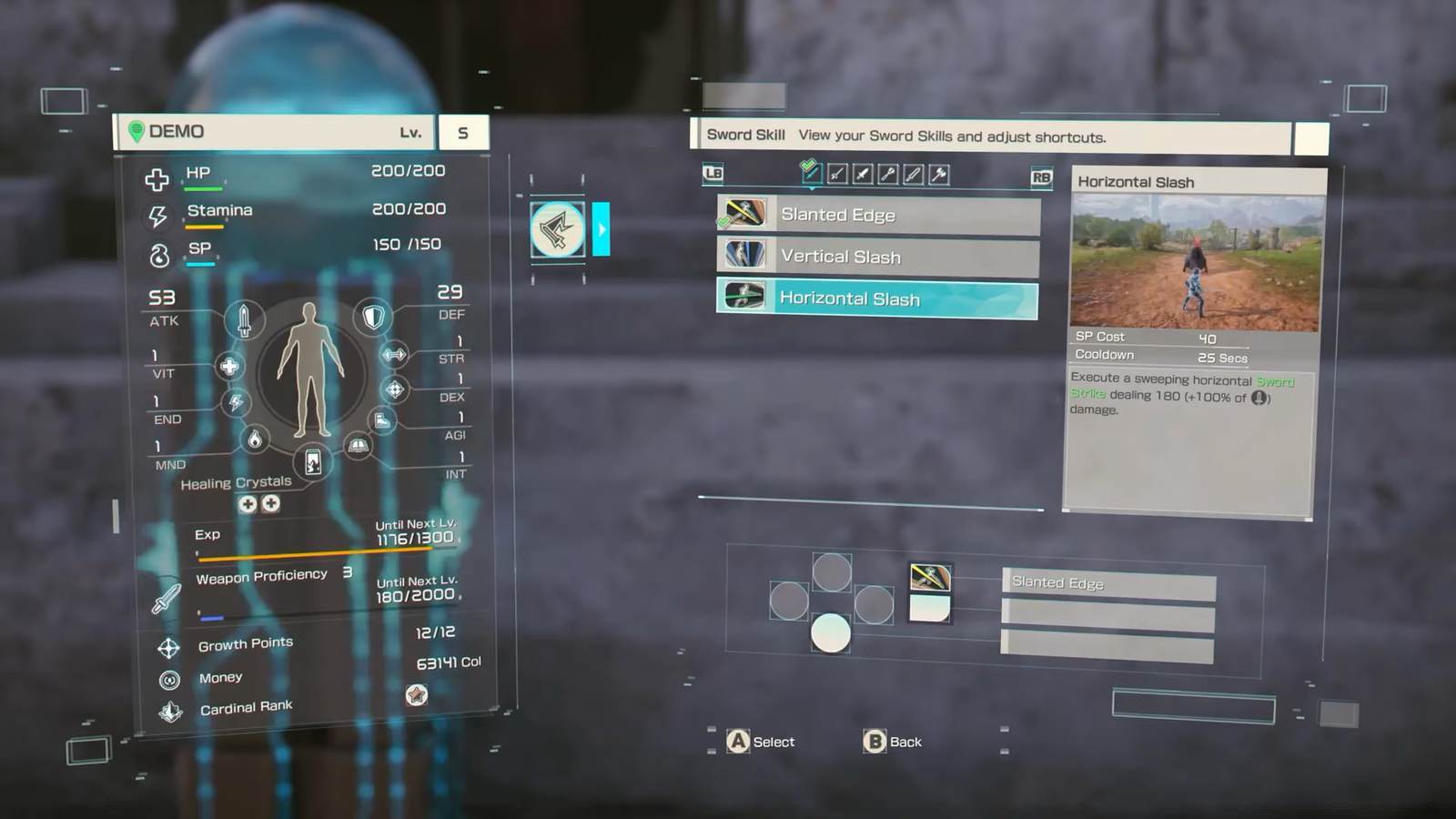
Sword Skills are the game's special attacks — scripted, high-damage moves that spend SP rather than raw Stamina. You can have up to three equipped at once, chosen from a pool that grows as you build Weapon Exp with a given weapon type. Each of the six weapon types has its own skill set — the one-handed sword's Horizontal Quad Slash, the dagger's Swarm Sting, the two-handed sword's Meteor Strike and so on.
Because SP refills by attacking, Sword Skills aren't something you sit on a timer waiting for — they're the reward you cash in after building meter with normal hits. The loop is: land attacks to charge SP, then spend it on a Sword Skill in a safe window (after a dodge, behind a boss, during a stagger). Dumping a skill at the wrong moment — mid-Stamina-crunch, or into an attack you should have dodged — is how good openings get wasted. There's a per-weapon breakdown of confirmed skills in the weapons database.
Defense: parries, dodges and the Reversal Slash
You have three defensive tools, and knowing which to use when is most of survival:
- Dodge — the all-purpose answer to heavy, committed attacks. Roll or sidestep through the hit; it spends Stamina, so you can't dodge forever. (Note: the two-handed sword's dodge is a longer roll rather than a quick sidestep — great distance, worse for tight repositioning.)
- Guard / parry — hold a shield or time a block against telegraphed sweeps and combo strings. Shields are available to the one-handed sword, rapier and mace; guarding also spends Stamina, and a well-timed parry opens a punish window the way a panic-block never will.
- Reversal Slash — a counterattack technique: answer an incoming strike with an immediate riposte. It turns a defensive read into offense, and it's the tell of a player who has stopped merely surviving and started controlling fights.
The rule of thumb: dodge the big committed slams, parry the telegraphed sweeps and strings. Blocking a heavy you should have rolled — or rolling a fast poke you could have parried into a Reversal Slash — is where chip damage adds up.
You're never alone: the partner and the Switch
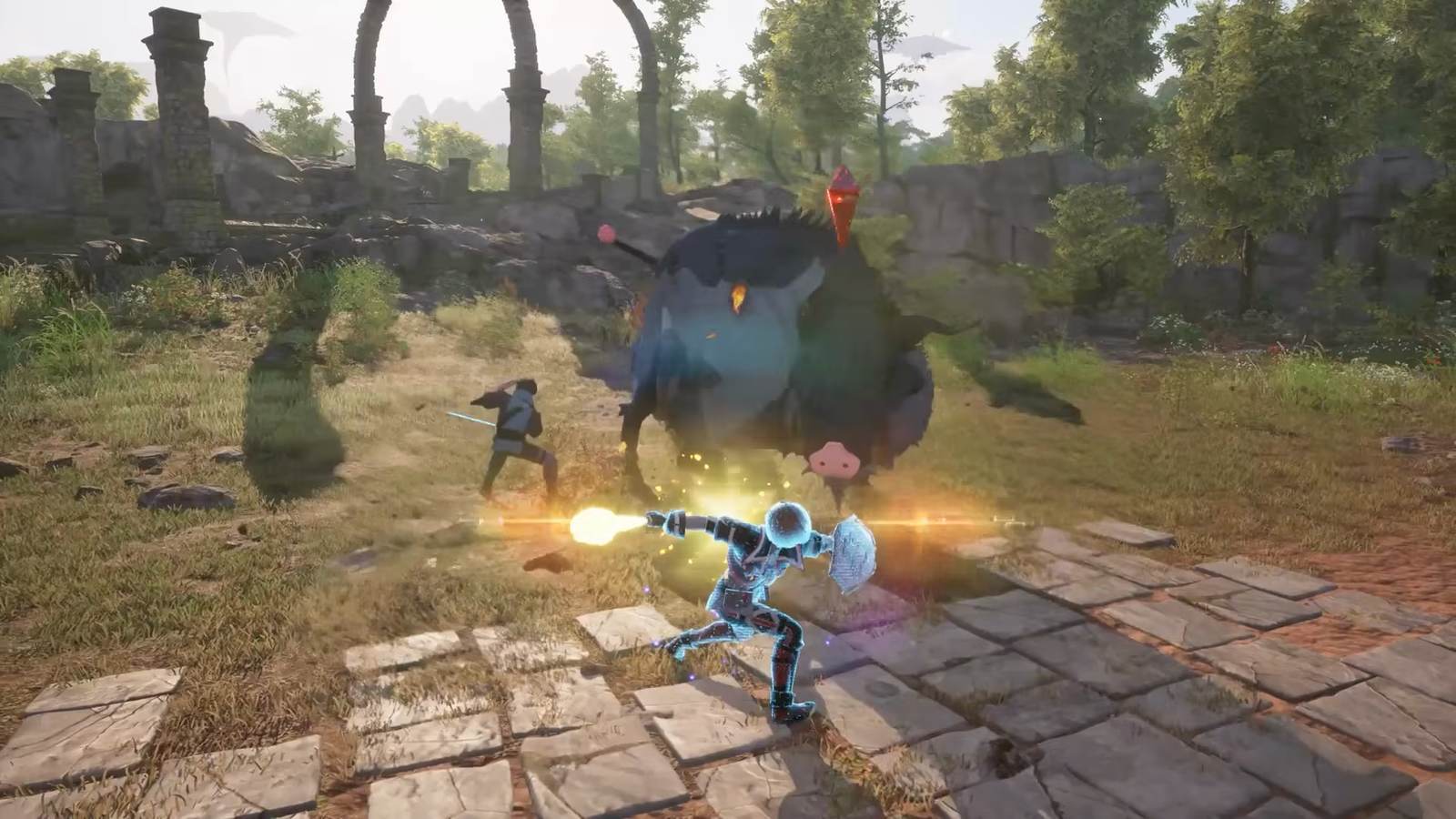
A partner fights beside you in almost every encounter (in the demo, that's Iori), and they're a real part of your kit, not scenery. Partners bring two things: Support Skills (heals, buffs and defensive assists you trigger from an action wheel) and Combination Skills (powerful team-up attacks that unlock once you've built enough meter in a fight). Managing those well can swing a boss fight outright.
Tying it together is the Switch and two tactical modes:
- Switch Mode — splits a tough enemy's attention between you and your partner. Tag your partner in to hold aggro while your Stamina refills, then tag back to punish. Against a single big boss, a good Switch rhythm is what keeps your gauges topped through a long fight.
- Free Mode — better when you want to clear multiple enemies, letting you and your partner peel targets one at a time or focus a single one together.
The full breakdown of companions, Support and Combination Skills lives in the partner system guide.
Putting it together: how a good fight actually flows
Here's the loop the three gauges are quietly teaching you, start to finish:
- Open by reading, not swinging. Let the enemy commit first; your Stamina is full and you want to keep it that way until you see an opening.
- Answer the attack — dodge the slam, parry the sweep, or Reversal Slash the poke. This is where fights are won: correct defense, not fast offense.
- Punish in a short burst — a few normal hits to refund SP, not a greedy combo that empties Stamina.
- Cash in a Sword Skill once you've got SP and a safe window (behind the boss, during a stagger).
- Reset. Back off, let Stamina breathe, Switch your partner in if you need a beat, and repeat.
Notice what's missing: mashing. The system is built so that the patient loop above out-damages button-spam over any fight longer than a few seconds, because spam bankrupts Stamina and leaves you unable to defend. Internalise this rhythm on the demo's forgiving early enemies and the harder fights stop feeling unfair.
Where combat connects to the rest of your build
Combat doesn't happen in a vacuum — it's shaped by choices you make outside the fight:
- Your weapon type sets your Stamina economy and which Sword Skills you get — see all six weapons explained.
- Your attributes (the seven stats) tune damage and pool sizes: Vitality raises HP, Endurance raises Stamina, Mind boosts SP-skill effectiveness. Plan them in the character creation guide.
- Your partner decides what Support and Combination Skills you bring — the partner guide covers it.
Once the loop clicks, take it into a real fight: the Sentry Golem is the demo's built-in classroom for exactly this rhythm, and the demo walkthrough puts it all in order.
FAQ
How does combat work in Echoes of Aincrad?
What is the difference between Stamina and SP?
How do you refill SP in Echoes of Aincrad?
Is there magic in Echoes of Aincrad?
Sources
Mechanics from the official Bandai Namco Gameplay Mechanics and Starter guides, cross-checked against the playable demo. Numbers are unpublished and flagged as such. Gameplay frames captured from the official Echoes of Aincrad demo trailer.