Short version: Echoes of Aincrad makes the hero an avatar you create—one of the 10,000 players trapped in the death game. The release version includes the appearance editor; the demo uses a preset appearance while still teaching the decisions that shape the run: stat direction, first weapon and early Growth Point spending. Demo progress can transfer into the full game through the official import flow.
Evidence basis. The avatar framework and seven attribute names come from the official Starter Guide and release materials. The three templates below are qualitative playstyle recommendations; they do not claim undocumented scaling coefficients or respec rules.
What character creation actually decides
Every previous Sword Art Online game handed you an established hero. This one hands you a mirror. The official pitch is that players "design personalized avatars reflecting their vision, with options to customize equipment, weapons, statistics, and partner selection" — which is marketing-speak for a useful truth: creation is four decisions, not one.
- Appearance — the face shown in cutscenes. The full game includes the editor; the demo uses a preset.
- First weapon — six types, three of them shield-compatible. This sets your early combat identity more than anything else.
- Stat direction — the seven attributes you'll feed with Growth Points at the Inn, level after level.
- Partner synergy — the companion at your side is officially framed as a build component, not a sidekick. That decision has its own guide.
Only the first of these happens on a "creation screen." The other three are commitments you renew every time you level up — which is why this page spends more time on direction than on sliders.
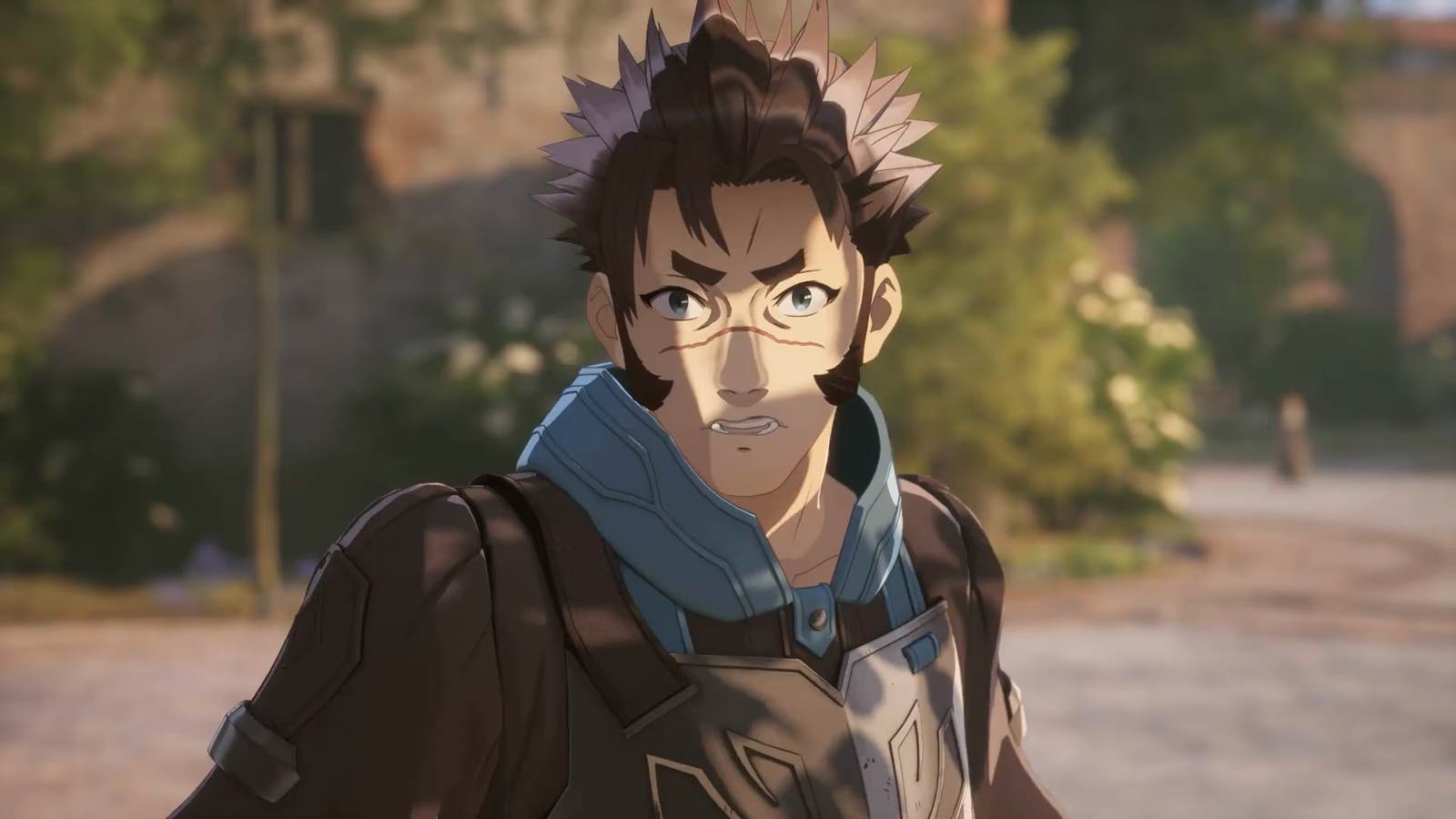
Appearance in the full game and demo
The release version includes the full appearance editor shown in official trailers. The demo deliberately skips that editor and starts with a preset look so players can enter the prologue dungeon quickly. Its useful carry-over is progression—weapon choice, levels and Growth Points—handled through the game's save-import flow.
Take time with the full editor because the avatar appears throughout a story-driven campaign. One franchise detail adds context: in the original SAO fiction, the death game forced each avatar to mirror the player's real face, while Echoes of Aincrad gives the player direct authorship over the protagonist.
The stat decision: pick a direction, not a spreadsheet
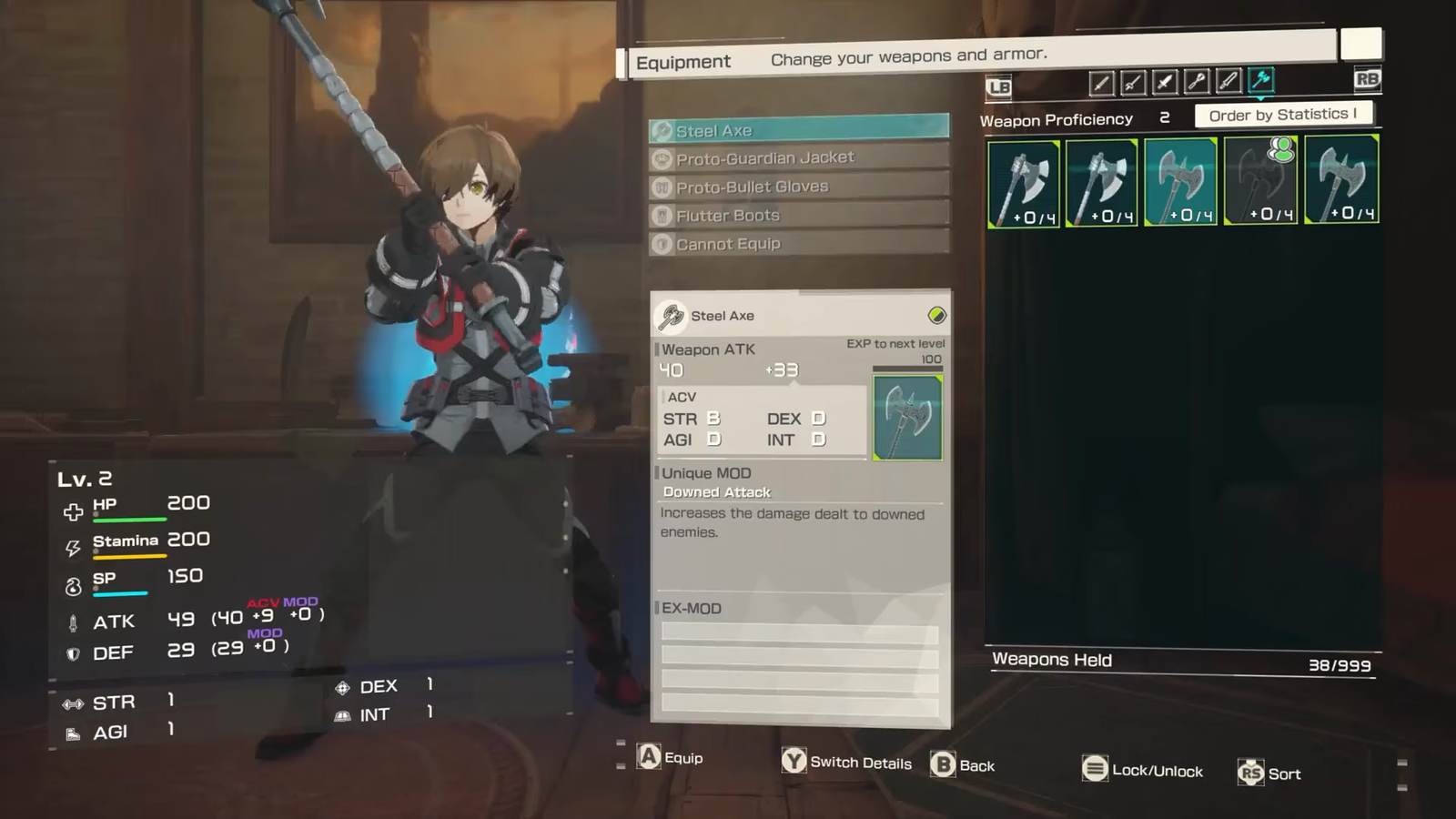
Your character grows across seven attributes, split into two groups. Four damage stats — Strength, Dexterity, Agility, Intelligence — raise how hard you hit, "depending on the weapon and skill" in the official phrasing. Three support stats are unambiguous: Vitality raises HP, Endurance raises Stamina, Mind raises the effectiveness of your SP abilities. The full attribute-by-attribute breakdown lives in the stats guide; what creation asks of you is simpler than that page's detail. It asks for a direction.
The one mistake to avoid is the polite one: sprinkling points across all seven attributes to "stay flexible." The game frames stats, weapon, equipment and partner as a single synergy system, and a little of everything synergizes with nothing. Commit to one damage stat and one or two support stats, and let every other choice reinforce them.
Three starter templates
These three directions cover most sensible first characters. None is a trap. The support-stat effects come from the official guide; each suggested damage stat follows the weapon's playstyle and is presented as qualitative reasoning rather than hidden numerical math.
| Template | Support backbone | Recommended damage direction | Weapon fit | For |
|---|---|---|---|---|
| Survivor | Vitality + Endurance | Strength | One-handed sword or mace, with shield | First playthrough, learning safely |
| Skirmisher | Agility + Dexterity* | Dexterity | Rapier or dagger | Fast hands, boss hunters |
| Breaker | Strength + Endurance* | Strength | Two-handed sword or axe | Big hits, stagger windows |
*Agility, Dexterity and Strength are damage-group attributes doing double duty as identity stats here — the Skirmisher buys speed and precision, the Breaker buys raw impact plus the Stamina to keep swinging.
Survivor — Vitality + Endurance
The forgiving one. Vitality gives you the HP to survive mistakes, Endurance gives you the Stamina to guard and dodge out of them, and a shield turns "I misread that attack" from a health crisis into a shrug. It's the template we'd hand any first-time player, and the backbone of any future Death Game Mode run — a mode where this build's whole personality (boring, alive) becomes the meta.
Skirmisher — Agility + Dexterity
The fast one. Agility and Dexterity express the movement-and-precision identity used by this qualitative template, while Rapier and Dagger make that identity visible through spacing and flurries. The trade is practical: you are betting on not getting hit, so the demo's bosses grade footwork honestly. This is role guidance, not a hidden scaling formula.
Breaker — Strength + Endurance
The heavy one. Strength drives the two-handers' huge committed swings; Endurance matters double here because those swings drink Stamina in gulps, and the two-handed sword's dodge is a long roll rather than a quick sidestep — you pay for mobility, so you need the tank to afford it. Slower rhythm, spectacular payoffs, and the best stagger game in the roster.
Your first weapon
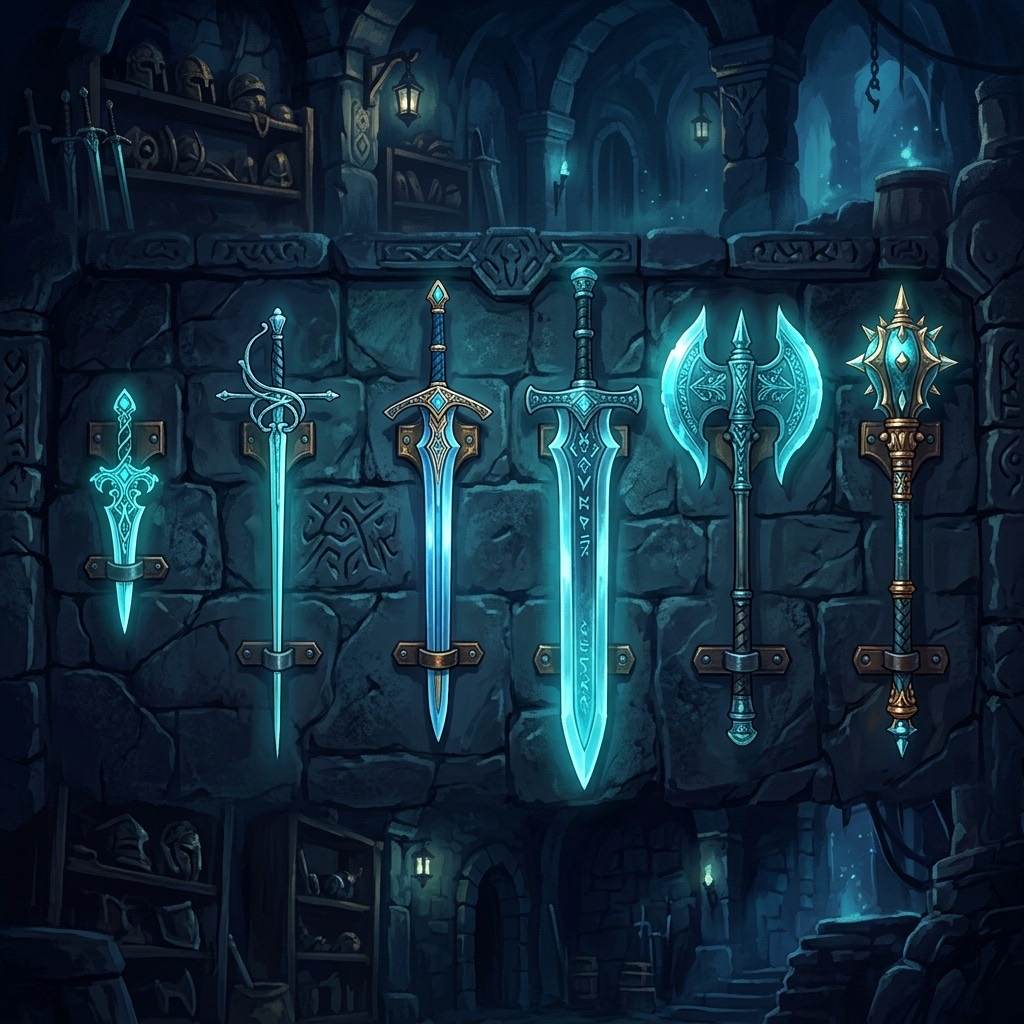
Six weapon types, and the honest headline is that the gap between them is smaller than tier-list culture suggests. The structural facts worth knowing before you pick:
- Shields go with three weapons: the one-handed sword, the rapier and the mace. If you want a block button on day one, pick from those.
- The dagger can be thrown — the roster's one ranged trick.
- The two-handed sword swaps the sidestep for a roll — more distance, less precision.
- You're not locked in. Weapon types can be switched later, so your first pick sets a direction, not a life sentence.
If you want the short answer, it's the one-handed sword — balanced, shielded, no bad matchups. If you want the full ranked argument, with what each weapon asks of you against the demo's bosses, that's the best starting weapon guide; the weapon overview covers all six identities in one place.
Spending your first Growth Points
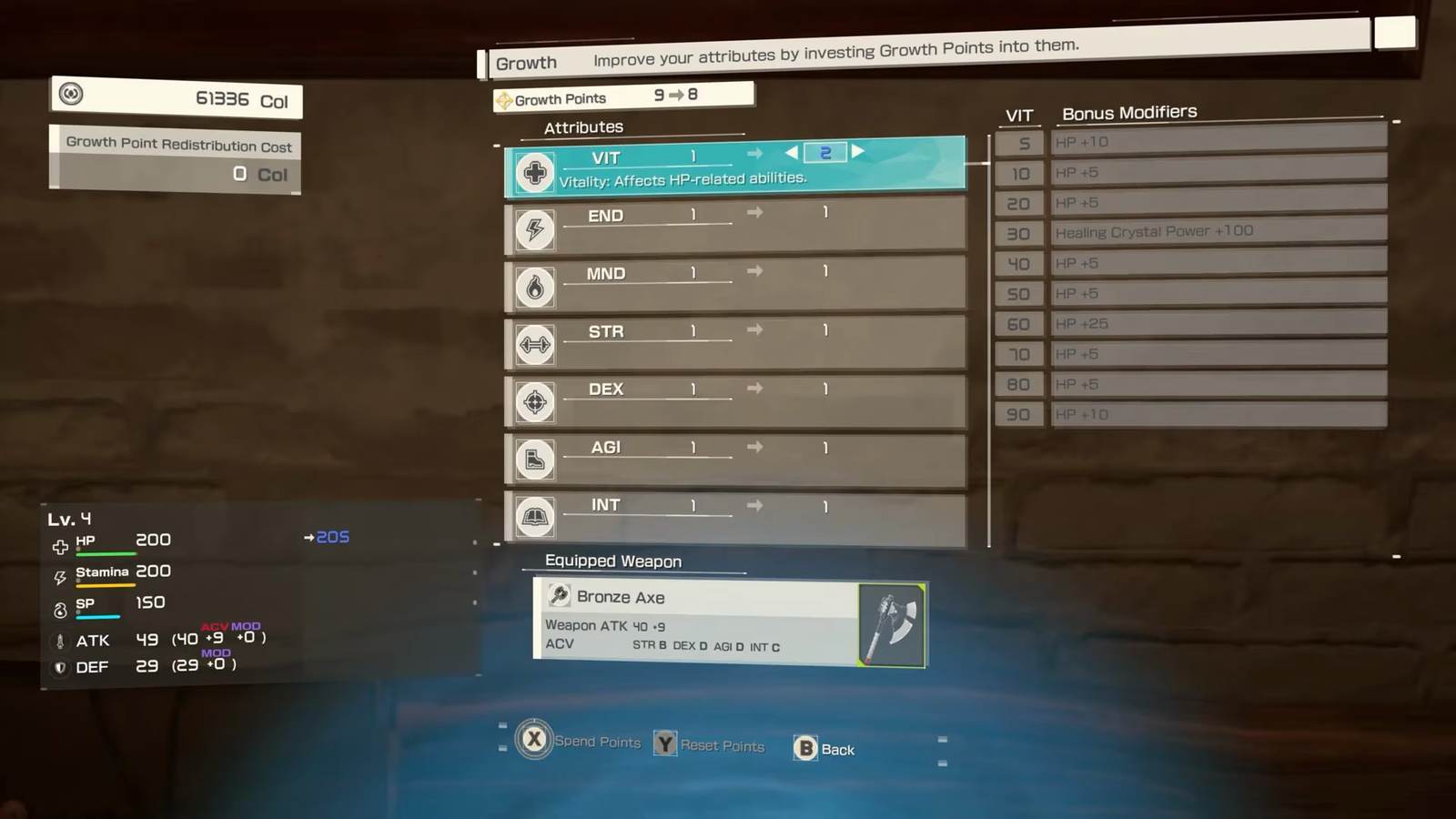
Stats don't get allocated on the creation screen — they grow through play. Defeating monsters levels you up, each level banks Growth Points, and you spend them on the seven attributes while resting at the Inn in town. That loop (and how to budget it) has a dedicated guide; the creation-day version is three rules:
- Feed your template. Lead damage stat plus your support backbone, every visit. A focused level 10 beats a diversified level 10, every time.
- Don't touch the stats your build doesn't use. A point in Intelligence on a Strength build is a point your character never feels.
- Keep a small reserve. A few banked points let you answer a wall with more Vitality or Endurance instead of committing every point before the build has faced a demanding boss.
The fourth decision: your partner
The official material lists "partner selection" alongside stats and weapons as a build component, and it means it — exactly one companion fights beside you, with their own gear, tactics and support kit, so the partner slot works like an equipment slot for an entire second character. Whether your template wants a healer covering its recklessness or a damage-dealer converting its durability into kills is covered in the partner system guide.
How to read the recommendations
- Documented facts: seven attributes, Growth Points spent at the Inn, six weapon types and a player-created protagonist.
- Demo-specific fact: the demo uses a preset appearance and supports progression transfer through the retail import flow.
- Editorial guidance: the three templates and weapon-stat pairings are designed around visible weapon behaviour and support-stat effects.
- Deliberate boundary: this guide does not assign hidden scaling coefficients or promise a particular respec or New Game+ rule.
That boundary keeps the guide useful without turning reasonable build logic into unsupported numerical claims.
FAQ
Can you create your own character in Echoes of Aincrad?
Can you customize your appearance in the demo?
What stats should a new player pick?
Does your demo character carry over to the full game?
Where to go next
Deep-dive the seven attributes in the stats guide, learn the earn-and-spend loop in the Growth Points guide, settle your weapon with the best starting weapon ranking, and complete the team with the partner system guide.
Sources
- Bandai Namco — Starter Guide
- Bandai Namco — Gameplay Mechanics Explained
- Echoes of Aincrad — Official Weapon Overview
Framework and attribute names from the official guides, cross-checked against the playable demo. Gameplay frames captured from the official demo trailer and Weapon Overview.