Short version: the two-handed sword trades safety for damage — high Stamina cost, long recovery, wide arcs, and a dodge that's a longer roll rather than a quick sidestep. It wants Strength for damage and heavy Endurance investment to survive its own Stamina hunger. Full stats and confirmed skills are in the weapons database; this page is the build and matchup layer on top.
Build method. Weapon identity and named skills come from the official Weapon Overview. Stat direction, matchups and EX-Mod priorities are qualitative recommendations derived from the weapon’s documented heavy attacks, roll and stamina demands; they are not numerical scaling claims.
A weapon that punishes impatience
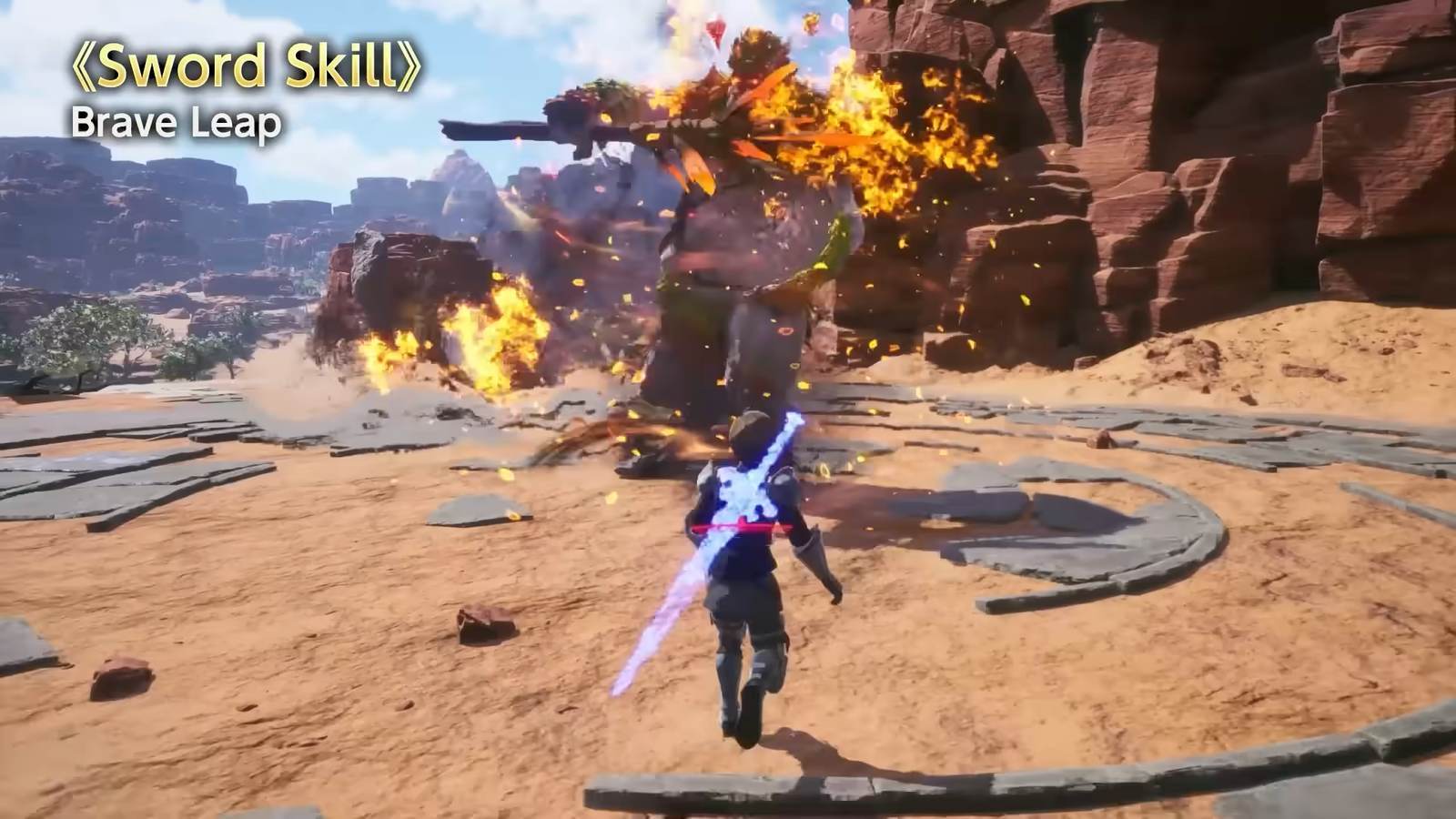
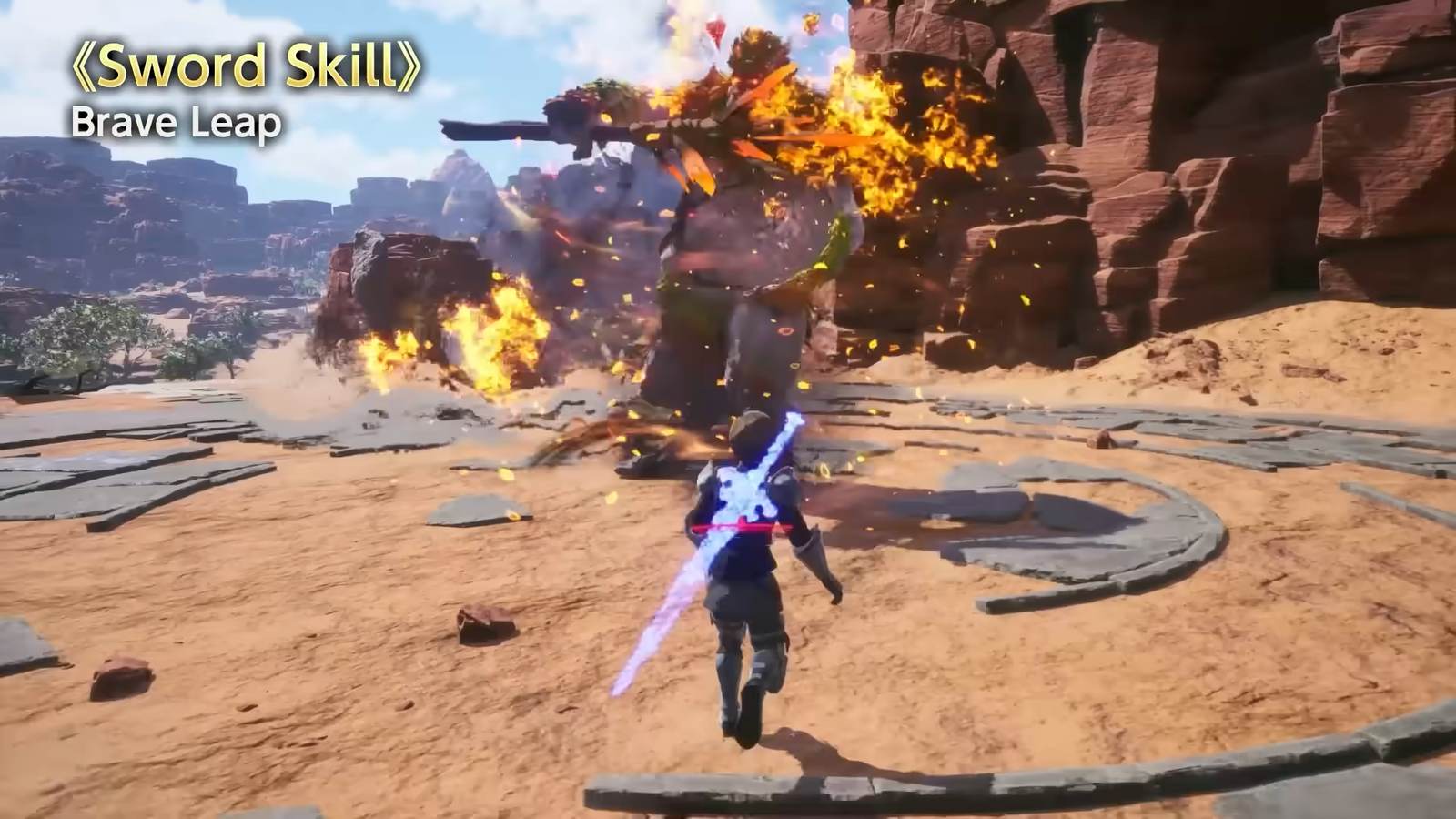
Every fundamental of the two-handed sword flows from one fact: its swings are slow and committal. Where the one-handed sword lets you throw an attack and still have Stamina for a dodge, whiffing a two-handed swing can leave you with nothing in reserve right as the enemy answers. Its confirmed skills — Brave Leap and Meteor Strike — read like a mission statement: a gap-closing leap and a heavy overhead finisher, both built around landing one big hit rather than stringing many small ones. This is the weapon for players who've already learned to read tells patiently on something safer, and want to spend that patience on bigger numbers.
The roll changes your defensive math
The detail that separates this weapon from every other type: its dodge is a longer roll, not a quick sidestep. That's a real trade — it covers more distance, which is great for escaping a bad position entirely, but it commits you to a longer animation, which is worse for the tight repositioning a faster weapon can afford. The practical upshot is that two-handed sword players need to read tells earlier than players on faster weapons. Where a dagger user can react late and still make the dodge window, a two-hander who waits that long is often too late. Build your reaction timing around "early," not "just in time."
Why this weapon rewards a specific kind of player
Some weapons are forgiving enough to learn the game on; the two-handed sword is the opposite — it's the weapon you graduate to once the game's reads already feel natural on something safer. Every mistake it punishes is a mistake the one-handed sword would have quietly absorbed: a swing thrown a half-second too early, a dodge attempted a beat too late, a greedy second hit when the fight was already telling you to back off. That's not a flaw so much as a filter. If you've already built the timing instincts on a more forgiving weapon, the two-hander lets you cash those instincts in for real damage. If you haven't yet, it will teach you the hard way, and probably faster than you'd like.
Stat pairing
Lead with Strength to reinforce the weapon's heavy-impact identity; this is a playstyle recommendation rather than a hidden-scaling claim. The support pairing matters more here than almost anywhere else in the roster: Endurance determines how many committed actions the shared Stamina pool can support. Back it with Vitality, since long recovery windows expose you to hits a faster weapon can avoid.
Matchup against the demo's bosses
- Sentry Golem: a strong matchup. It's slow enough that the two-hander's committal swings rarely get punished, and circling to its poorly-tracked back to land a charged Meteor Strike is close to the ideal use case for this weapon.
- Illfang the Kobold Lord: the toughest of the three. His 360° sweep and faster pace punish the sword's long recovery hard — this fight demands you dodge (roll) earlier than feels natural, and save Meteor Strike strictly for confirmed stagger windows rather than opportunistic swings.
- Raging Boar (field elite): favorable if you respect the charge. A charging enemy telegraphs its commitment clearly, which gives the two-hander's slow but huge punish window to land safely — just don't try to out-trade its follow-up attacks.

EX-Mod priorities
Stamina-cost reduction is close to mandatory on this weapon — more than any other type, the two-hander's whole viability rests on affording its swings, so any EX-Mod that eases that cost compounds directly into more opportunities to attack safely. A secondary priority is anything that speeds recovery after a swing, since the recovery window (not the swing itself) is where this weapon actually dies. Attack-boost effects are tempting but lower priority — the weapon already hits hard; what it lacks is the safety to keep swinging.
Partner pairing
Pair this weapon with a defensive or crowd-control partner. Because your own recovery windows are long, you want your partner covering for you during them — holding aggro via the Switch while your Stamina refills, or peeling secondary threats in Free Mode so you're never fighting more than one committed swing's worth of danger at a time. An offensive partner is more redundant here, since you already bring plenty of damage — what this build actually needs is time.
Launch partners to test first: Iori and Wyzeman are the shield-compatible cover picks, while Lisbeth is worth testing if her Mace kit brings support rather than pure damage. Avoid assuming Zash is automatically ideal just because he also uses a Two-handed Sword; mirror damage does not solve your recovery problem by itself.
Starter Sword Skill loadout
With only two skills confirmed so far, Brave Leap and Meteor Strike anchor the loadout by default — Brave Leap to close distance and open an exchange, Meteor Strike as your committed finisher once a target is staggered or you've read a long enough opening. Until a third skill is confirmed, the real "third slot" decision is tactical rather than mechanical: leave room in your play pattern for a defensive Switch rather than trying to fill every moment with offense.
How it compares to its closest alternative
If the two-hander's Stamina hunger feels too punishing, the two-handed axe is the nearest neighbor — similarly big and committal, but built around Guard Break and crowd control rather than single-target burst. If you want the impact without giving up a shield entirely, no other weapon offers that combination; the trade-off is fundamental to this weapon's identity. Trying the axe alongside the sword during the demo is the fastest way to feel which flavor of "big and slow" actually suits you.
Playing around the recovery window, not just the swing
New two-handed sword players tend to think about the weapon in terms of its swing — how wide the arc is, how hard it hits. The players who actually do well with it think about the recovery instead. The swing is the part of the exchange you control; the recovery is the part the enemy controls, and it's where every two-handed sword death actually happens. Before you commit to a Brave Leap or a Meteor Strike, the real question isn't "will this land" but "what happens to me in the second afterward if it doesn't, or even if it does." Answering that honestly — is there a second enemy nearby, is the boss's own recovery faster than mine, is my partner in position to cover me — is the actual skill this weapon is testing, more than the swing itself ever is.
Common mistakes
- Swinging on instinct instead of on a read. This weapon has no room for reactive mashing — every swing needs to be a decision made in advance.
- Under-investing in Endurance. More than any other weapon, low Endurance turns this build's power into a liability.
- Dodging late. The longer roll needs an earlier trigger than a sidestep — waiting for the same visual cue you'd use on a faster weapon often isn't early enough.
FAQ
Is the two-handed sword good in Echoes of Aincrad?
What stats work best with the two-handed sword?
Does the two-handed sword have a shield?
Where to go next
See the full stat block in the weapons database, invest Endurance properly in the stats guide, and compare it to the crowd-focused two-handed axe.
Sources
Gameplay frames captured from the official Weapon Overview and demo; player-captured footage credited in each caption.