Short version: Sword Skills are your weapon type's special attacks — scripted, high-damage moves that spend SP. You unlock more of them by building Weapon Exp with a weapon, but you can only equip three at once, so your loadout is a real choice. Because SP refills by attacking, skills are a reward you earn in the fight, not a cooldown you sit and wait for. Fit this into the bigger picture with the combat system overview.
Source boundary. The official Weapon Overview and gameplay materials document the named examples below. This guide explains the verified combat roles and deliberately avoids assigning SP costs, unlock levels or tree positions that those sources do not show.
What a Sword Skill actually is
In a combat system with no magic, Sword Skills are the closest thing to a spell — but they're pure weapon technique. Each is a scripted animation with its own hit count, damage and timing, triggered at the cost of SP. They're the difference between chipping at an enemy with normal attacks and actually closing out a health bar. A well-placed skill during a boss's stagger can do more than a dozen light hits, which is why knowing when to spend one is as important as which ones you bring.
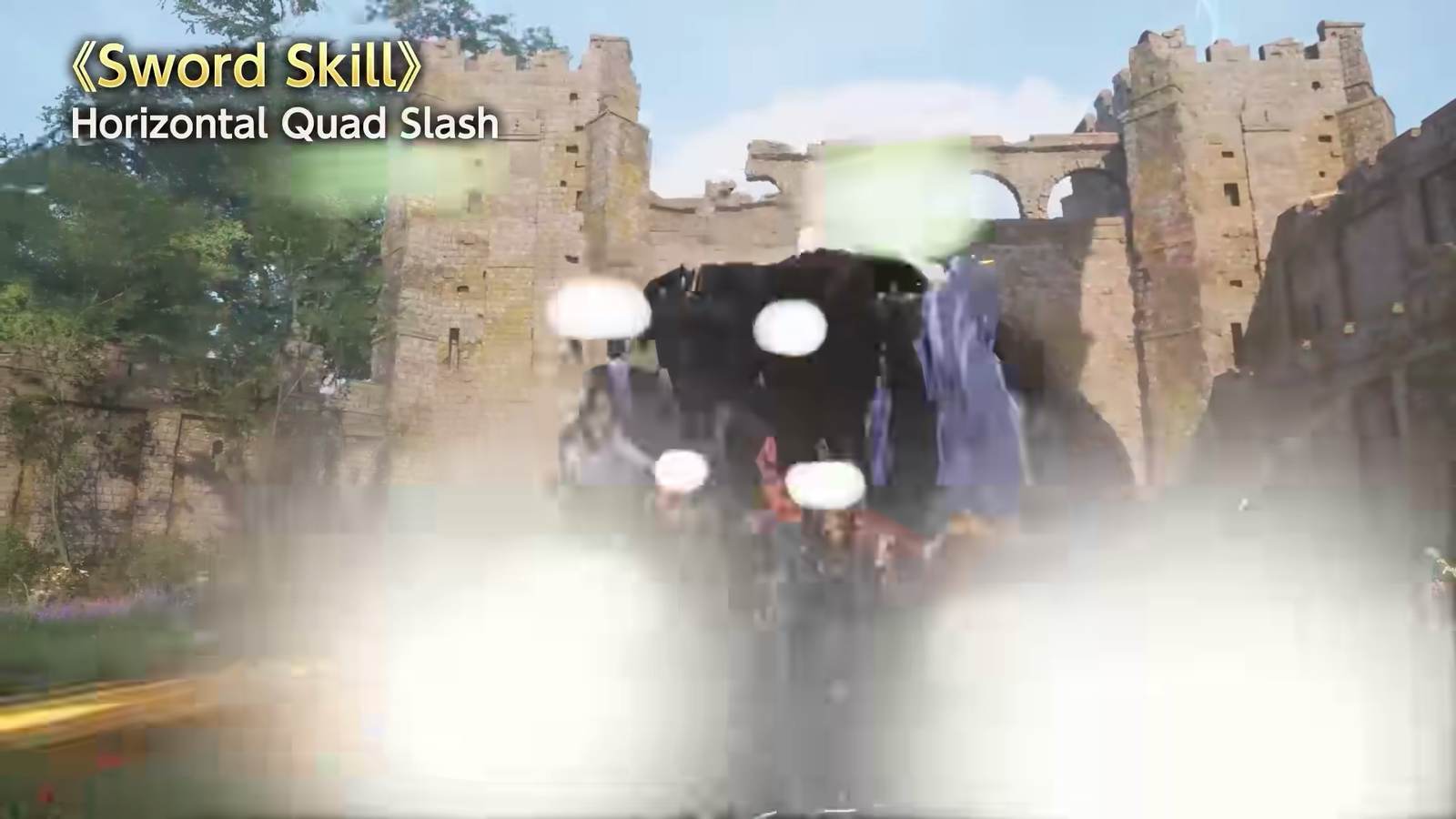
SP: the currency of skills
Every Sword Skill spends SP, a resource separate from Stamina. The rule that shapes everything: SP refills mainly by landing attacks. That makes skills an aggressive-play reward — you build meter with normal hits, then cash it in. It also means hoarding a full SP bar is wasted potential; the skill you're "saving" is damage you're not dealing. The disciplined loop is: attack to charge, spend in a safe window, repeat. In a pinch, a consumable can refill SP directly — handy in a defensive fight where openings to attack are scarce. The full economy is covered in the Stamina & SP guide.
Weapon Exp: how skills unlock
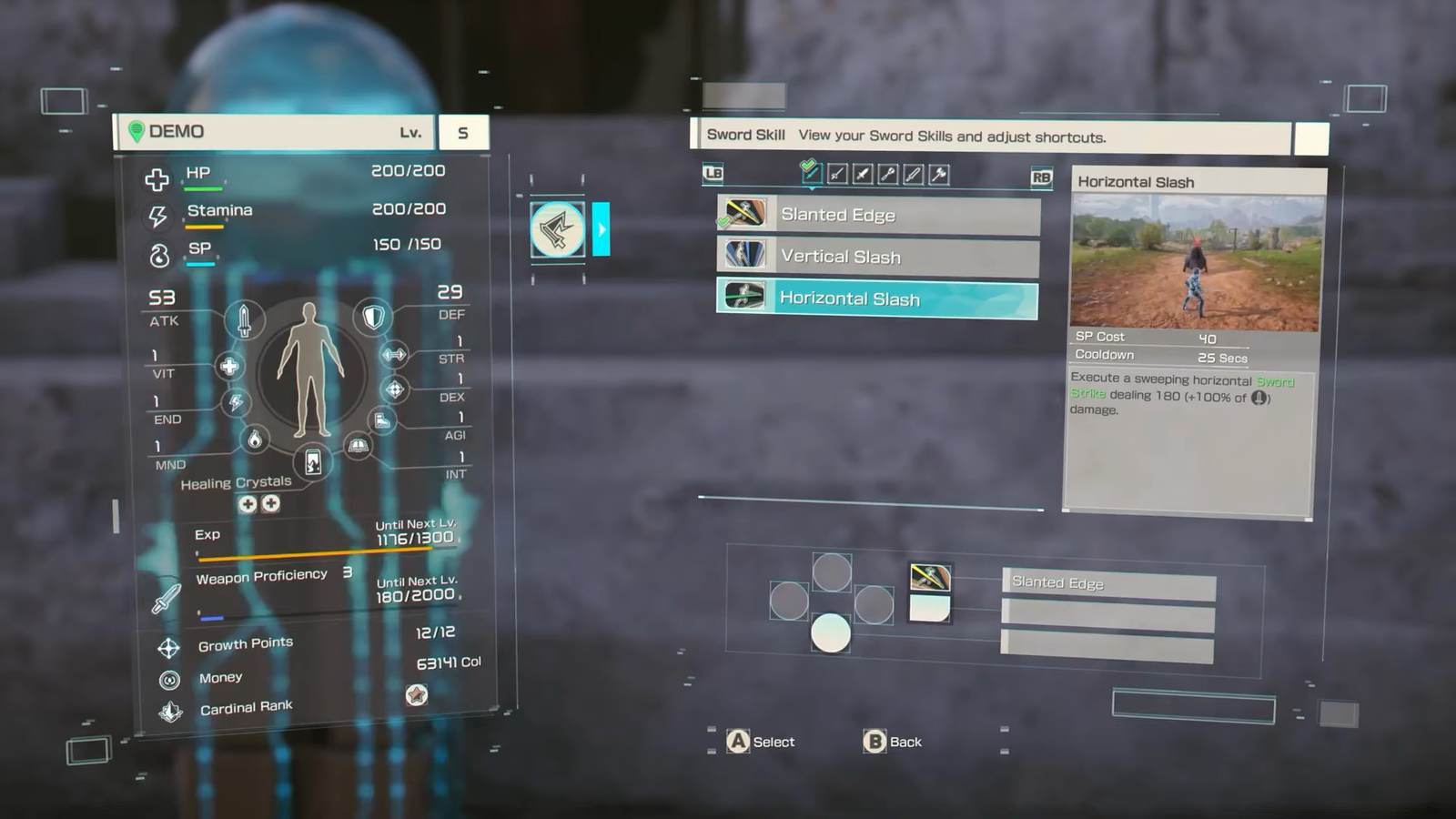
You don't buy Sword Skills from a menu — you earn them by using the weapon. Fighting with a given weapon type builds its Weapon Exp, which unlocks more of that type's skills as it grows. This has a strategic consequence people miss: because Weapon Exp is tracked per type, switching your main weapon means starting a new type's skill pool close to cold while your old type's earned skills sit unused. Experimenting across all six is exactly what the demo is for, but once the full game is live, committing to a type and deepening its skill pool compounds. Weapons themselves are only swapped at the Inn between quests, so you fight each stretch with a settled kit.
Only three slots: loadout is a decision
You can equip up to three Sword Skills at a time, chosen from everything you've unlocked. That cap is the interesting part — it forces a loadout identity instead of a "press everything" grab bag. A balanced three might be one fast opener, one high-damage committal skill for stagger windows, and one skill with reach or crowd coverage. Against a single boss you might drop the crowd option for a second single-target nuke; against packs you might bring a wide skill you'd never slot for a duel. Treating those three slots as a puzzle to fit to the fight ahead is a genuine layer of the build.
Officially shown skills by weapon type
These named examples come from the official Weapon Overview. The table is a source-indexed reference for evaluating weapon identity, not a claim to reproduce every in-game skill-tree entry:
| Weapon | Confirmed skills | Flavor |
|---|---|---|
| One-handed sword | Sharp Nail, Rage Spike, Horizontal Quad Slash | Balanced openers and a multi-hit arc |
| Dagger | Rapid Bite, Swarm Sting, Emerald Edge | Fast flurries of short-range pokes |
| Mace | Wave Bash | Blunt impact that breaks defenses |
| Rapier | Lier Lunge, Cyclone | Linear thrusts and spinning pressure |
| Two-handed sword | Brave Leap, Meteor Strike | Big committal leaps and slams |
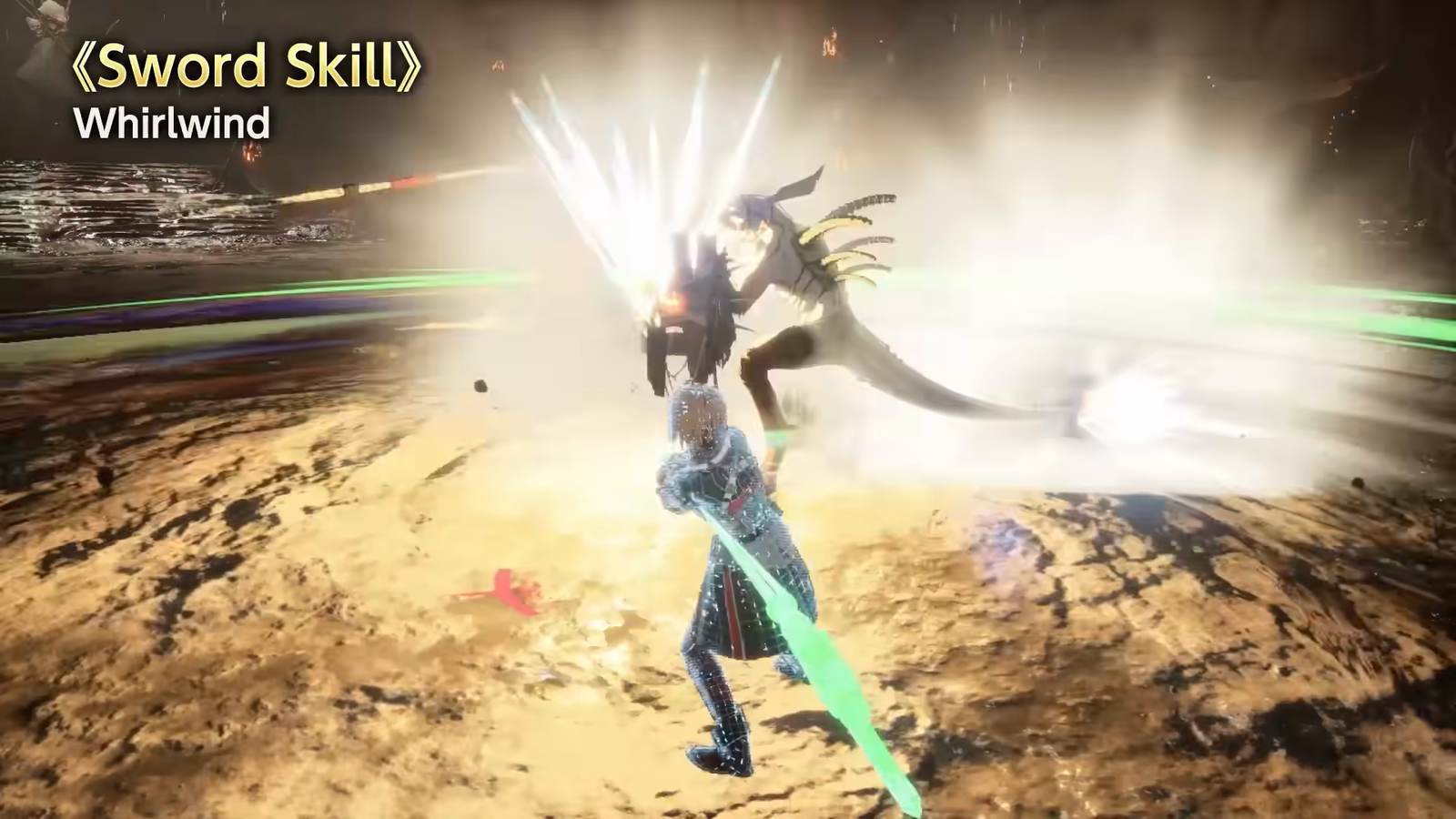
| Two-handed axe | Whirlwind | Wide spins built to break a crowd |
The names carry real identity — the dagger's Swarm Sting is a flurry, the axe's Whirlwind a crowd-clearing spin, the sword's Horizontal Quad Slash a four-hit arc. Every source-listed example with its practical role lives in the Sword Skills database, while the weapons database organizes the same evidence by weapon type. Neither page substitutes invented numbers for fields absent from the cited material.
Guard Break: what skills do to defended enemies
Not every enemy stands still to be hit. Shielded and armored foes can turn away chip damage, which is where certain Sword Skills earn their keep: heavy, blunt or wide skills like the mace's Wave Bash and the axe's Whirlwind are built to Guard Break — to smash through a defense or stagger a poised enemy so it's open to follow-up damage. This is the tactical reason the "right" skill shifts per fight. Against an armored target like the Sentry Golem, a stagger-oriented skill does more real work than a faster but flimsier one, because it converts a defended enemy into an open one. Reading whether a fight wants raw damage or a break-and-punish is part of choosing your three slots.
How to time a Sword Skill
Because skills are committal animations, when you use one matters as much as which:
- After a dodge or parry. The window you open by answering an attack is the safest place to spend a skill.
- During a stagger. When a boss is broken or reeling, dump your highest-damage skill — this is where the big committal moves pay off.
- Behind a slow enemy. Against something like the Sentry Golem, circle to its back and land a charged skill where it can't answer.
- Not into a wind-up. Throwing a long skill animation while a boss is about to attack is how you trade a chunk of your HP for a chunk of theirs — rarely worth it.
The Mind attribute raises SP-ability effectiveness, so a skill-focused build invests in it to make each of these windows hit harder. Plan that in the character creation guide.
Skills commit — you can't take them back
A Sword Skill is a scripted animation, and that's a double-edged sword: the damage is front-loaded and reliable, but once you trigger it you're locked into the full motion. You can't cancel a skill mid-swing to dodge, which is why when you press it is a real decision, not a free action. Fire a long skill into a boss's wind-up and you'll often trade a big chunk of your own HP to land it — a bad rate. Fire the same skill into a stagger or right after a dodge and it's free damage. That commitment is also why the three-slot cap makes sense: skills aren't a hotbar you flick through reactively, they're a small, deliberate set you time.
The design intent behind three slots rather than a full palette is identity over breadth. A dozen hotbar skills would push you toward reacting; three forces you to build a plan — an opener, a payoff, and an answer to your weakness — and to know each one's timing cold. Rework the loadout at the Inn between fights, try different trios against the Sentry Golem, and note which three you actually reach for. That earned instinct is more useful than copying an “optimal” list detached from your timing and matchup.
FAQ
What are Sword Skills in Echoes of Aincrad?
How do you unlock Sword Skills?
How many Sword Skills can you equip?
Do Sword Skills use Stamina or SP?
Where to go next
Fuel your skills by managing the SP gauge, pick the weapon whose skill set fits you in the weapon guide, and see every type side by side in the weapons database.
Sources
Gameplay frames captured from the official Echoes of Aincrad Weapon Overview and demo trailer.